Enable Bank Feeds (Sage 300)
Bank Feeds is available for eligible Sage 300 users. This guide covers eligibility requirements, how to install the product, and the steps for retrieving bank transactions.
Eligibility Requirements
To use Sage 300 Bank Feeds, you must have:
- An active subscription to Sage 300.
- Access to the Reconcile E-Statement Module within Sage 300.
Installation Overview
To map your Sage 300 bank accounts to the corresponding accounts at your financial institution, complete the registration process during installation.
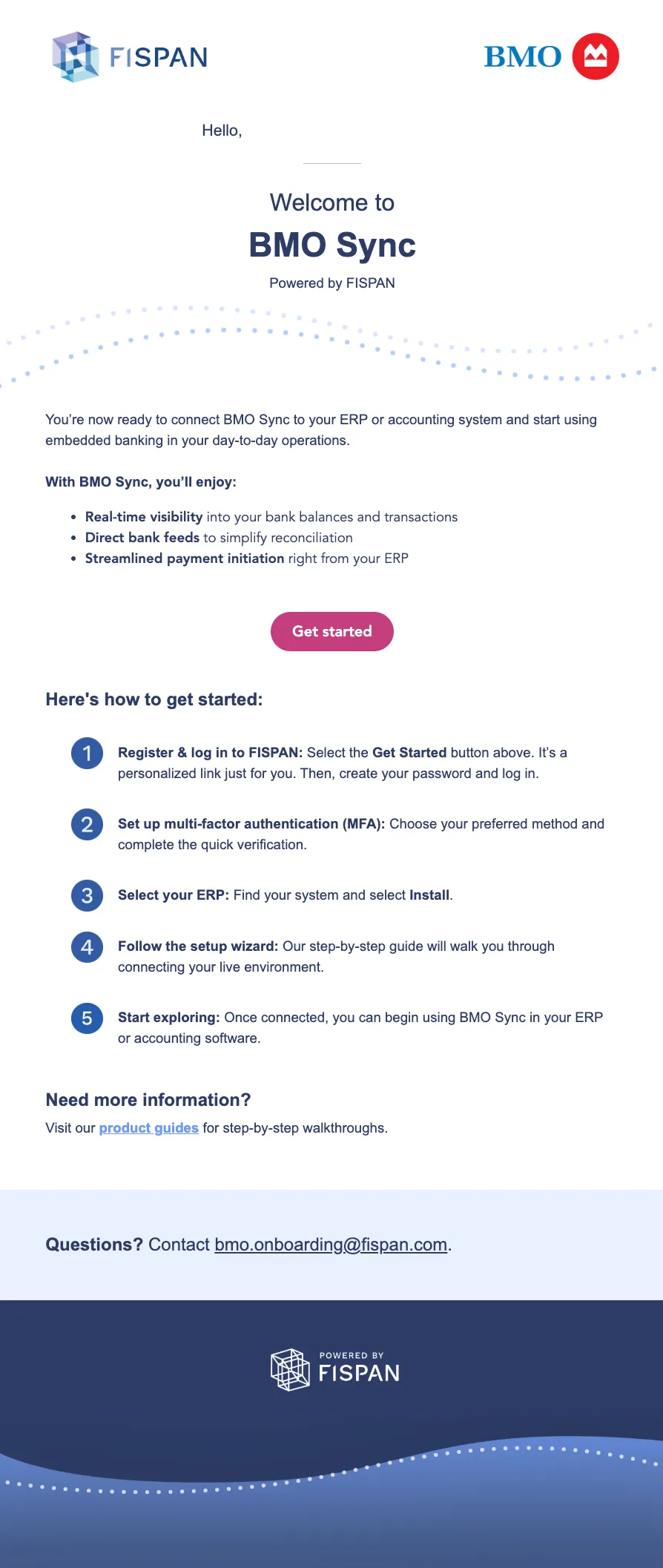
Keep an eye on your inbox for an invitation email from FISPAN, sent on behalf of BMO. This email contains links to install the BMO Sync plugin and access FISPAN Sync, along with easy-to-follow instructions for using both tools.
The invitation email will arrive with the following subject line:
Welcome to BMO Sync - Powered by FISPAN [Production] - [your-name]
Register & Login
Create an Account
In your invitation email, select the Get Started button. You will be brought to the FISPAN Portal. Create your login credentials and select Create Account.
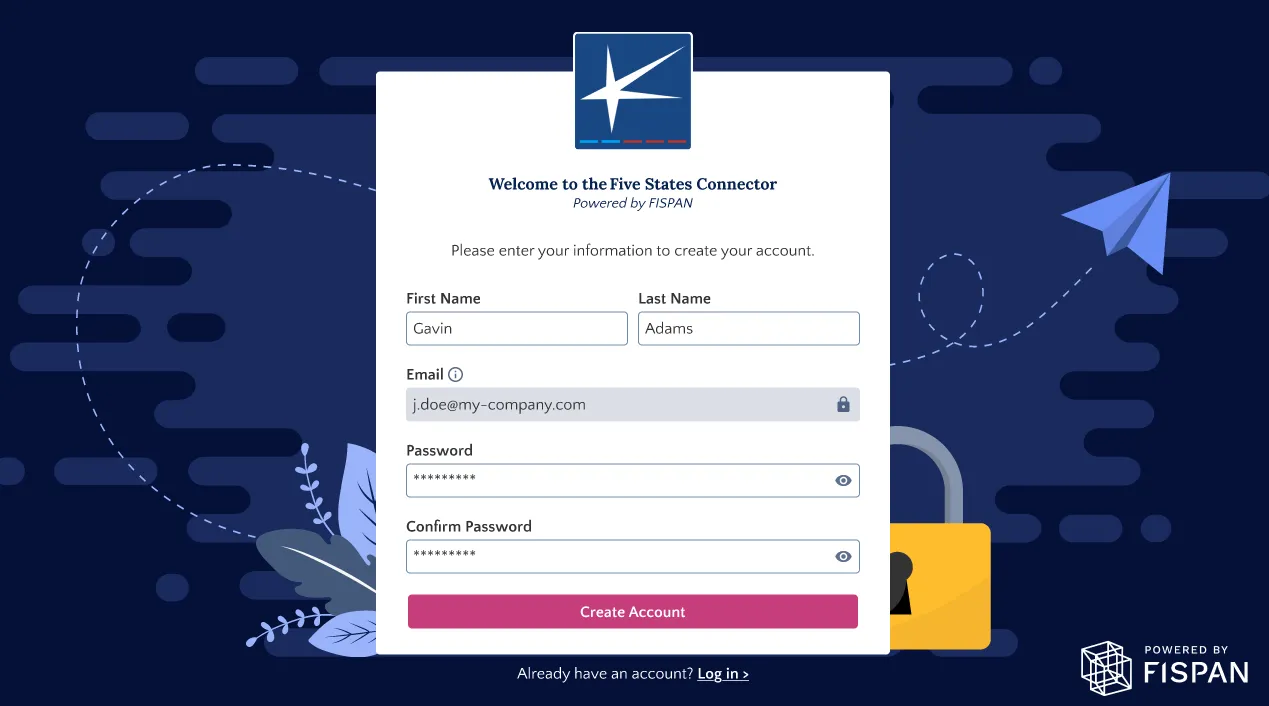
NOTE: The password you create here will be used every time you want to access the FISPAN Portal. If you need to update it later on, you have the option to use the Forgot Password option.
Login to Your Account
Once registered, you will be redirected to the login page. Your username and password are unique per environment, and you will have separate logins between Sandbox and Production.
NOTE: The Sandbox environment is used as a testing or UAT environment. For Sandbox users, please refer to the Sandbox Checklist for test scenarios.
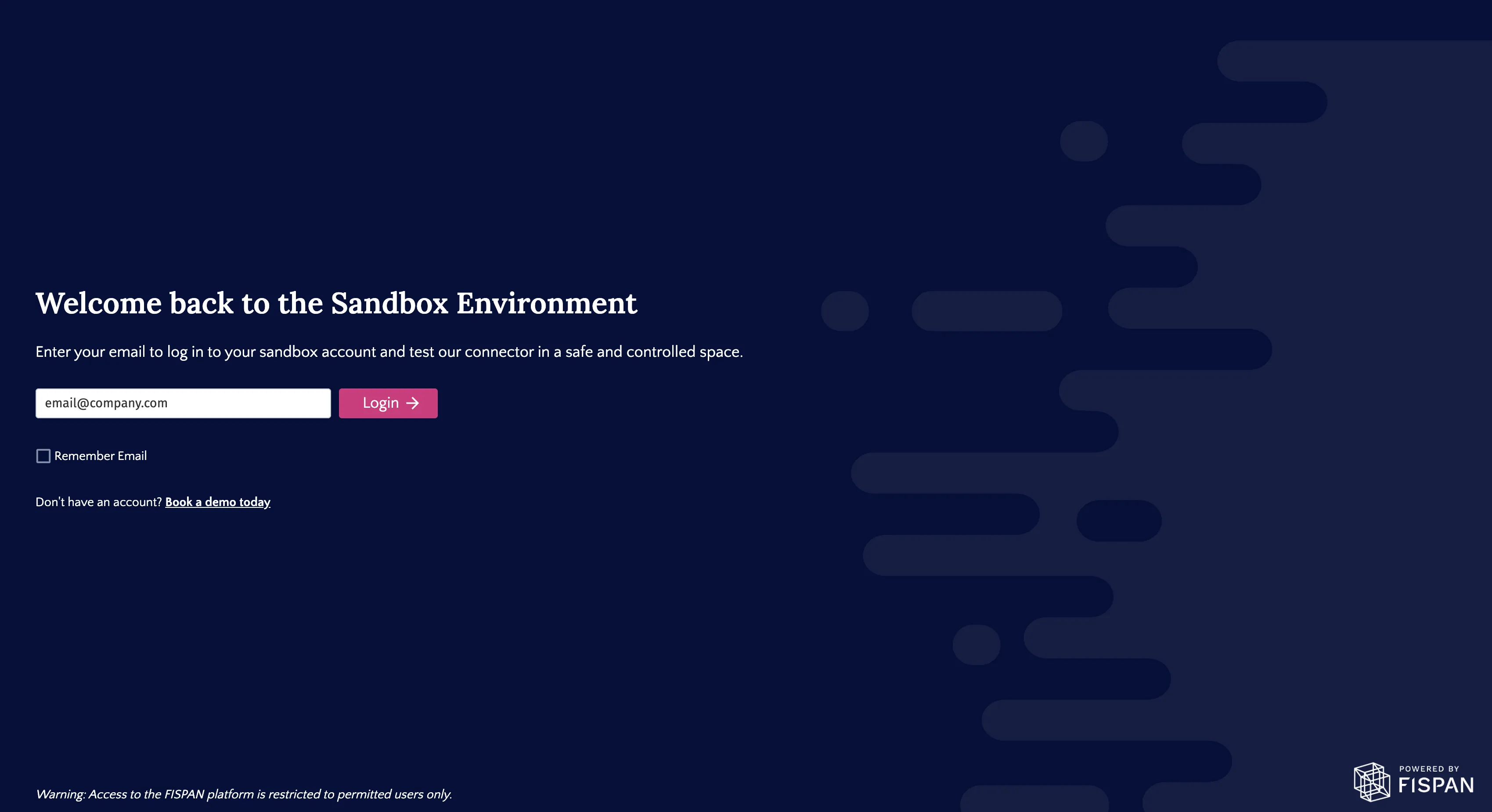
From the welcome page, you'll be taken to the login page. Enter your username and password to proceed.
Setting Up SMS MFA
NOTE: Multi-factor Authentication (MFA) is only required if you are a user in the Production environment. If accessing the Sandbox environment, you may skip this step.
The first time you log in to the Production environment, you will be prompted to establish your Multi-factor Authentication (MFA) setup. You have the option to select various methods of MFA.
Enroll Phone Number
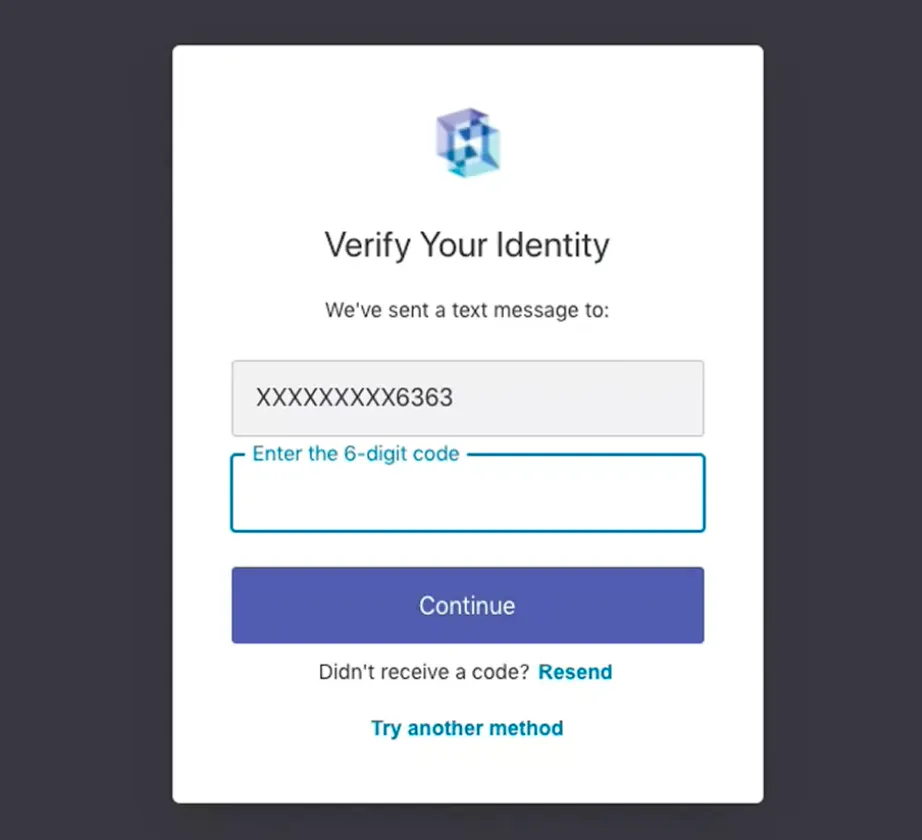
Select your country code then enter your phone number, you will receive a text message with a 6-digit code via SMS to the phone number you provided for enrollment.
If you are unable to receive a text message to this number, or you prefer a different multi-factor authentication method, click Try Another Method.
Enter Code
Enter the 6-digit code you received in the applicable field.
Select Continue.
Save Recovery Code
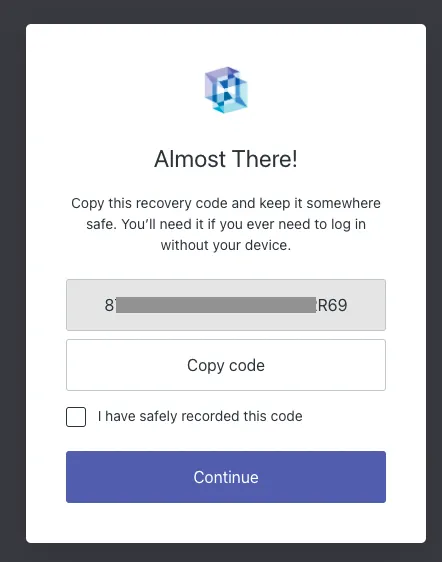
After setting up SMS and inputting the first one-time code, you will be presented with a recovery code that should be stored in a safe location. This code is for resetting the MFA, to switch the MFA type (i.e., Authenticator), or to use a different phone number.
Connect to Sage 300 Bank Feeds
To connect your bank accounts in Sage 300 to the Bank Feeds feature, follow these steps.
Access Bank Reconciliation
Log in to Sage 300.
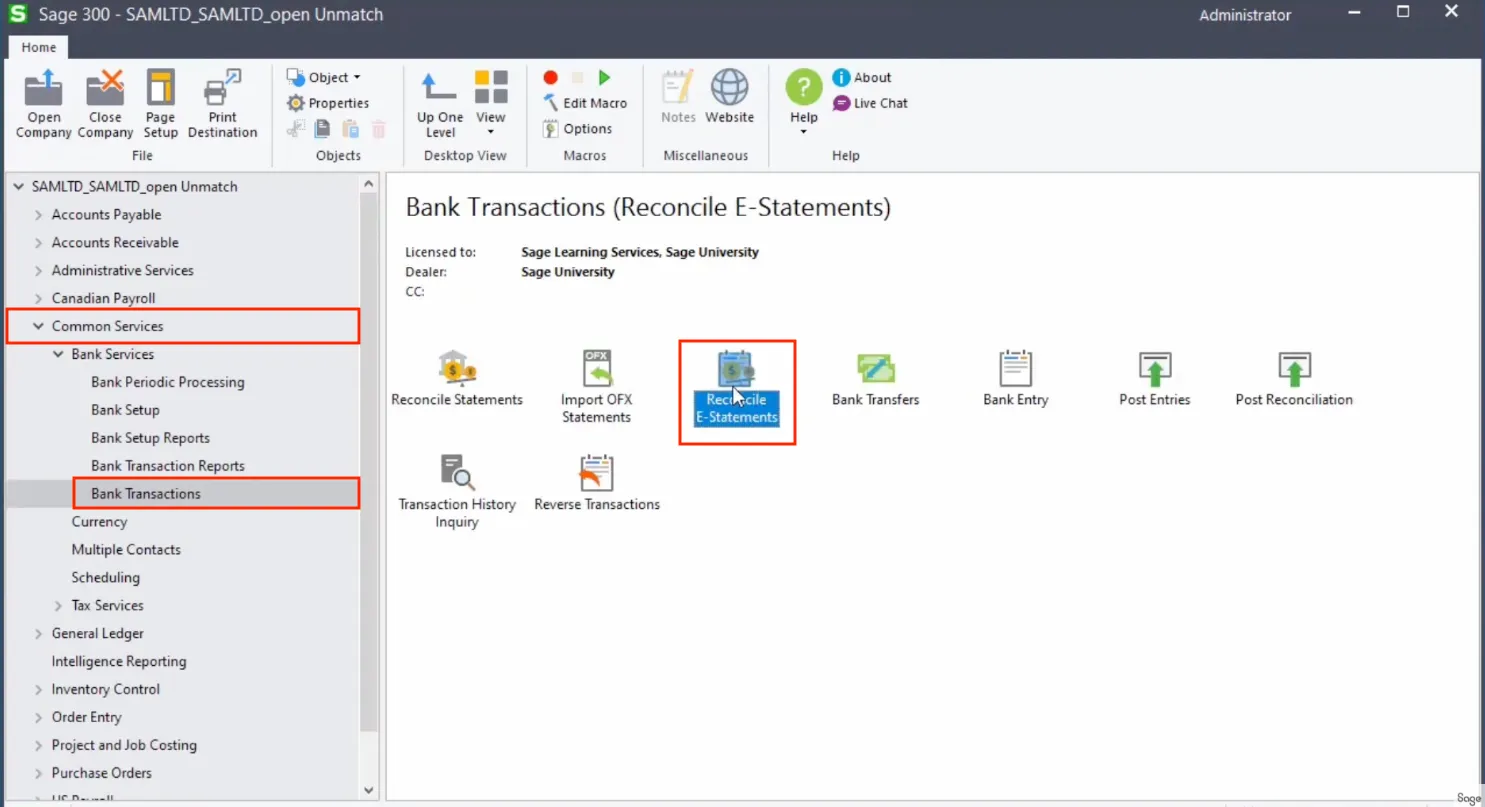
Navigate to Common Services -> Bank Services -> Bank Transactions -> Reconcile E-Statements.
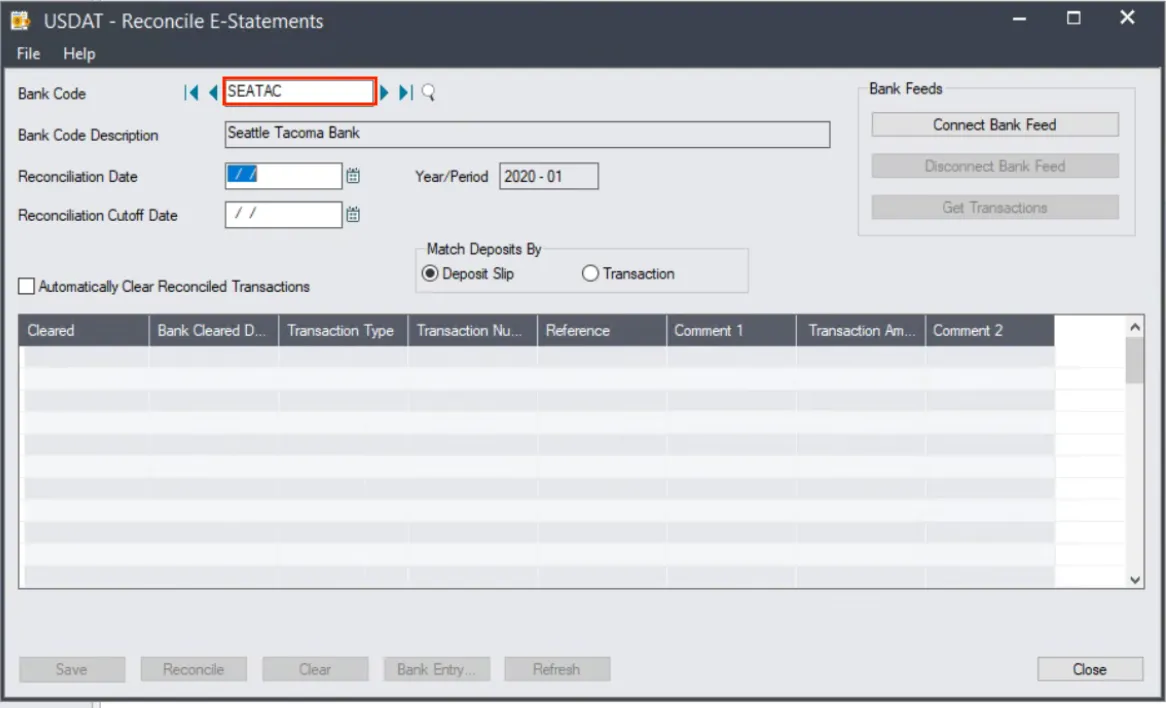
On the Reconcile E-Statements page, enter the Bank Code you want to connect Bank Feeds to.
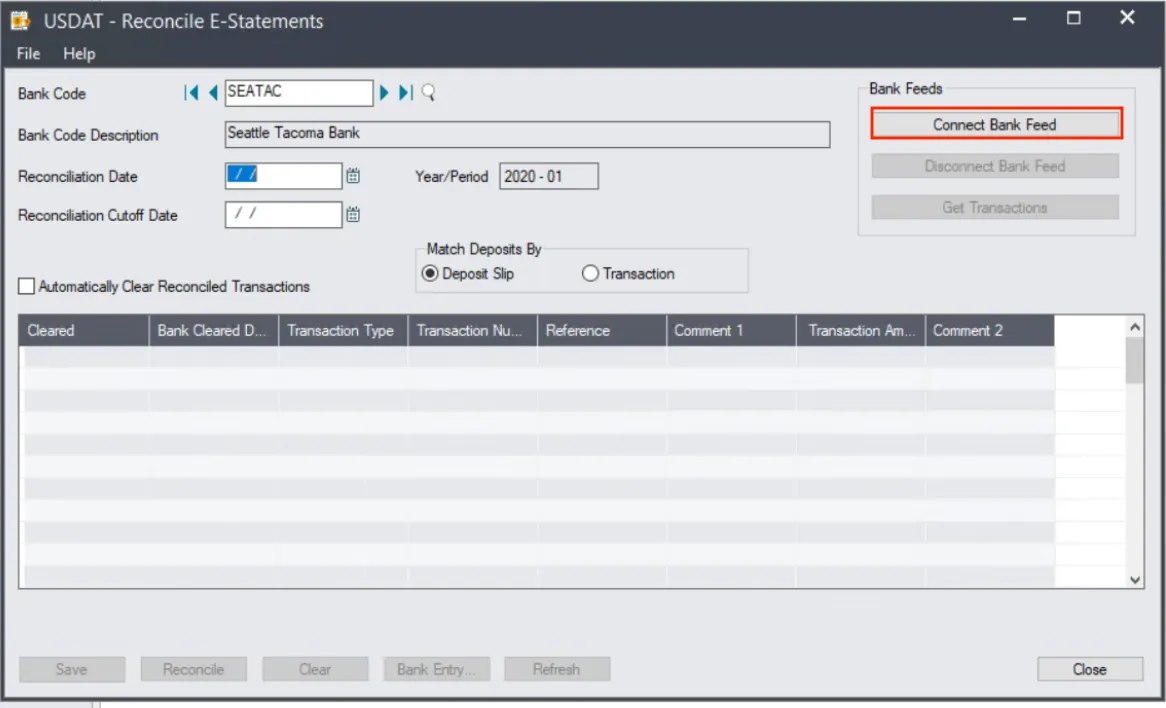
Click Connect Bank Feed
After a Bank Code has been defined, select Connect Bank Feed on the right side of the screen.
You may be asked to enter an email address (if you didn't do so during initial Sage 300 setup) and/or complete a Captcha.
Connect Your Bank
A new pop-up window should appear, prompting you to Connect your bank.
In the search bar search BMO and select "BMO Online Banking for Business (Powered by FISPAN)".

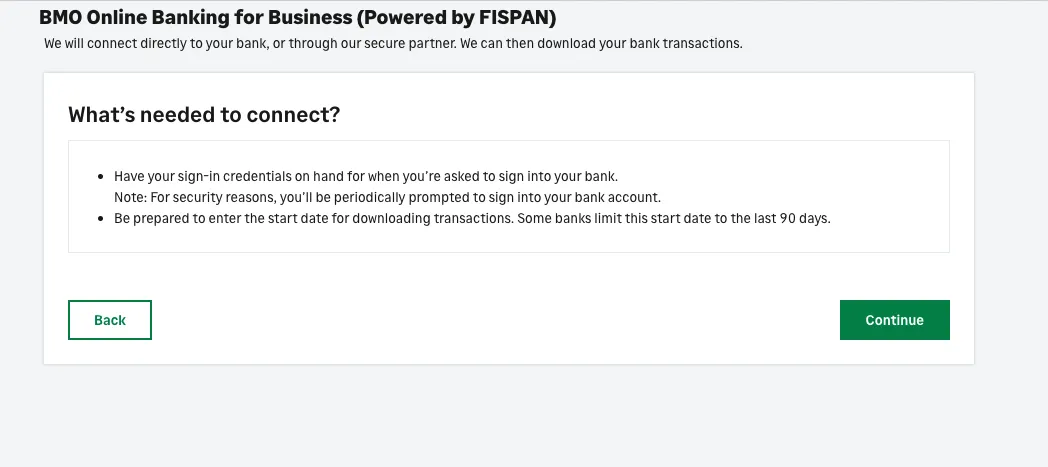
Review the terms and conditions and select Continue.
Log in to the FISPAN Portal
Now, you will be redirected to a landing page for the FISPAN Portal.
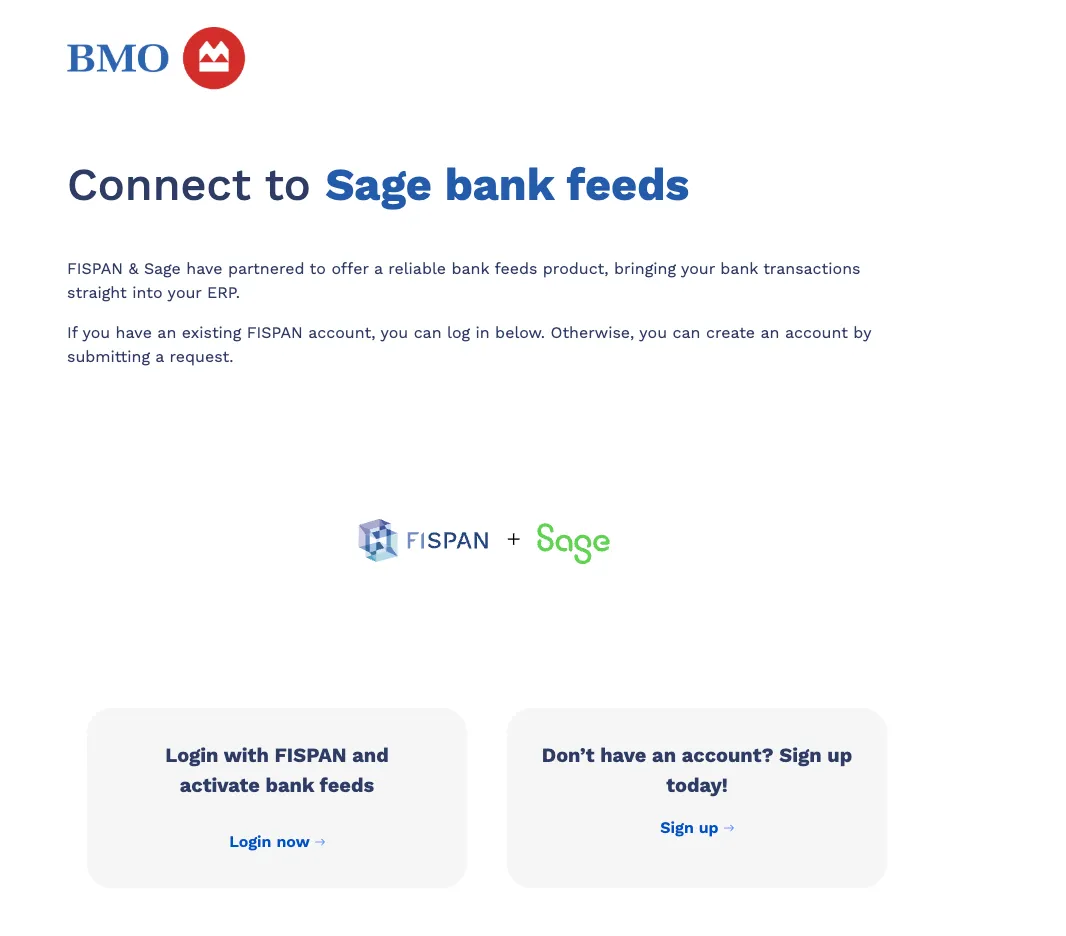
Click on Login Now and sign in to the FISPAN Portal.
Authenticate Bank Connection
Once you log in to the FISPAN Portal, you will be taken to the installation wizard. Follow the steps below in the installation wizard to connect to the BMO OLBB portal and grant access to your bank accounts.
Initiate Connection
Click Reconnect to Your Bank.
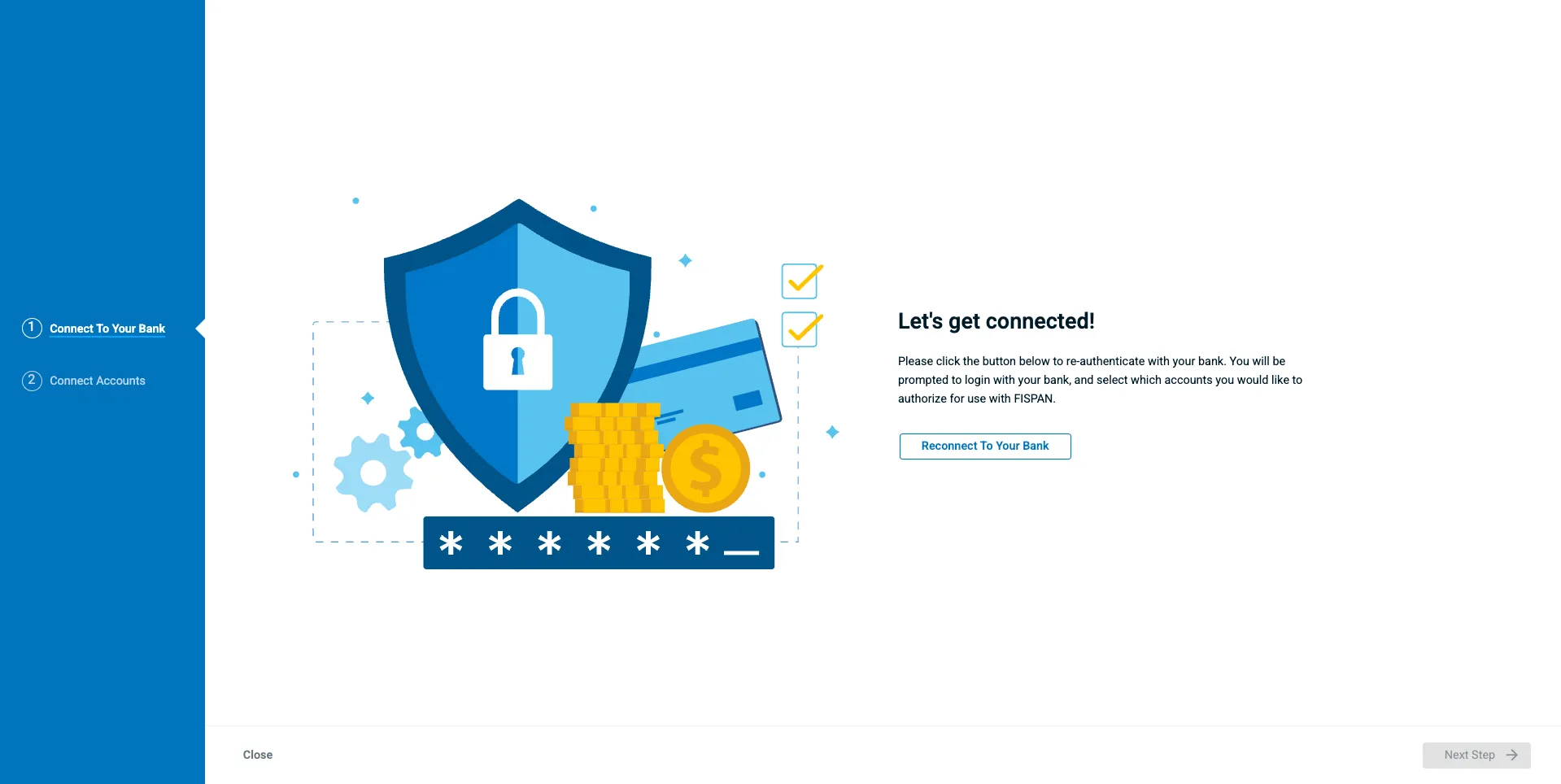
A new window for you to log in to BMO.
Log in to BMO OLBB Portal
Log in to the BMO OLBB Portal with the credentials provided by BMO.
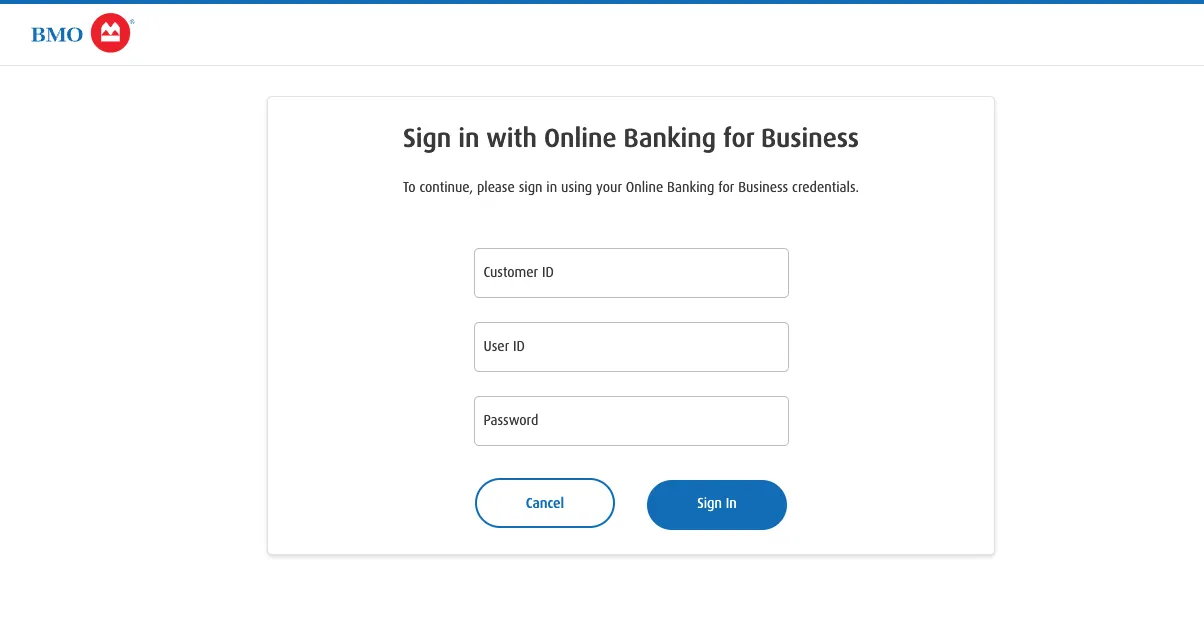
Select Accounts
Once logged into the BMO Portal, select the Account Information checkbox.
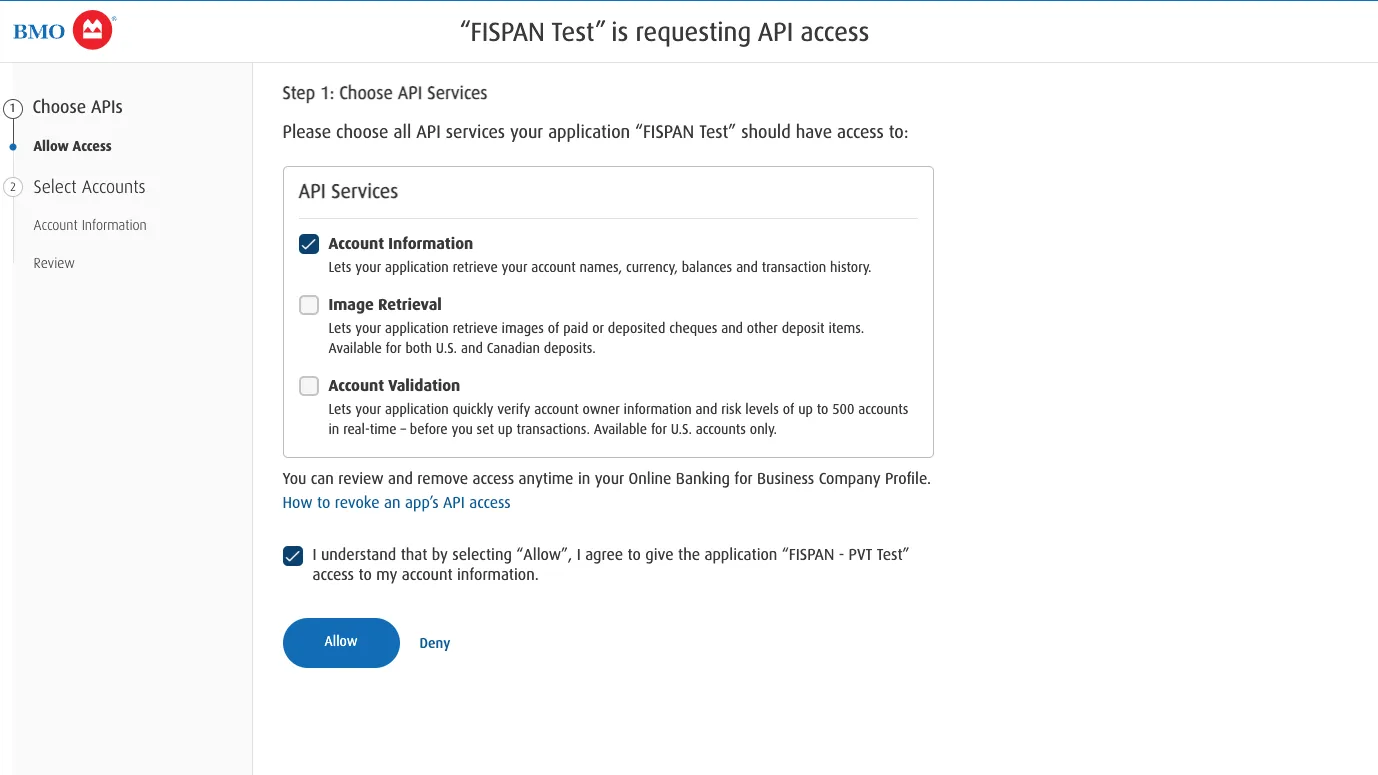
You will then be presented with BMO accounts. Check the box(es) next to the account numbers provided on the enrolment form. Then, press Allow.
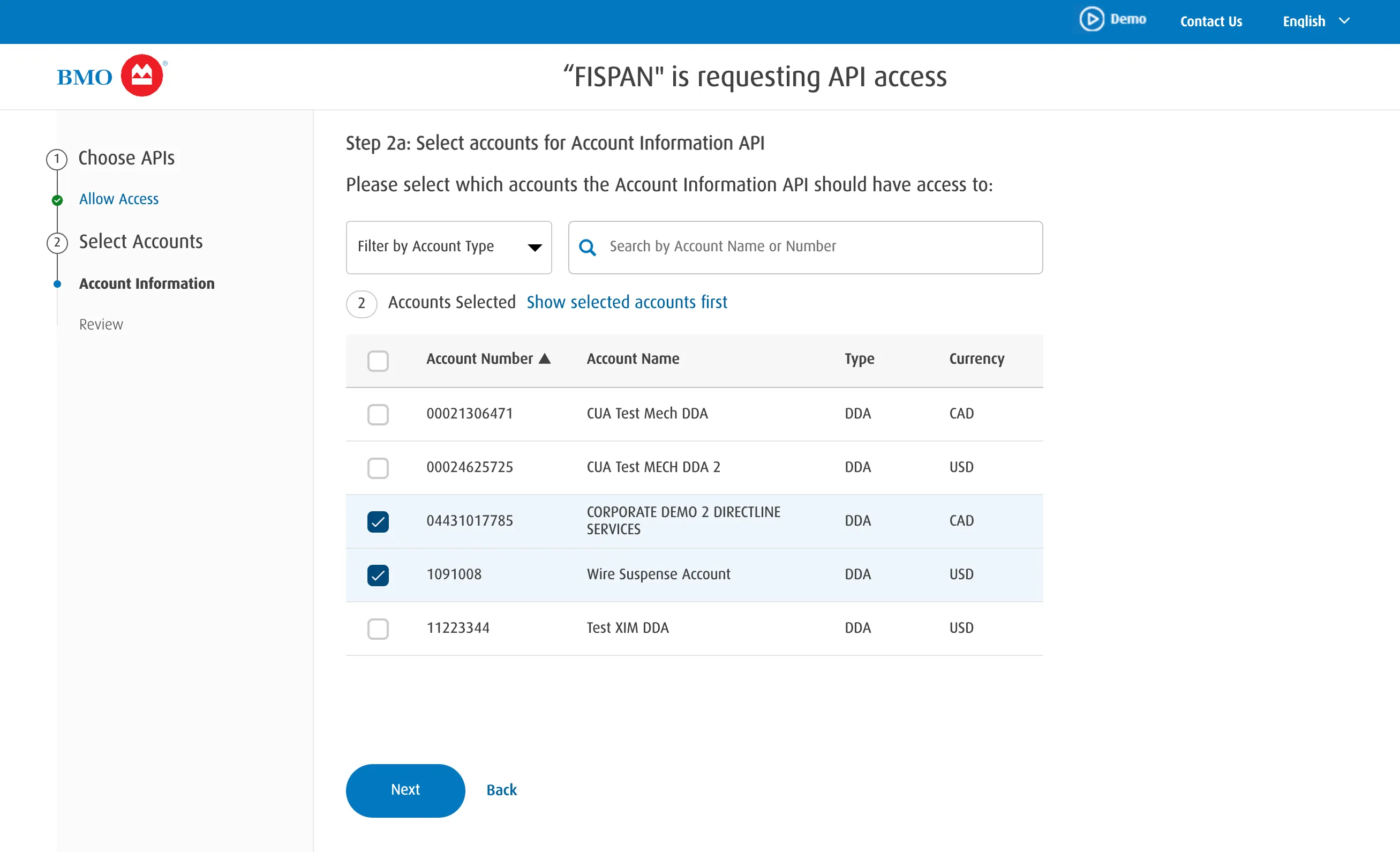
Click Next.
Confirm Accounts
Review your account selection for each API.
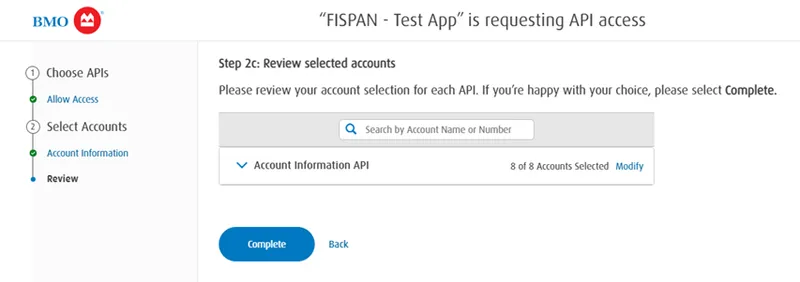
Click Complete.
The success confirmation window will be displayed.
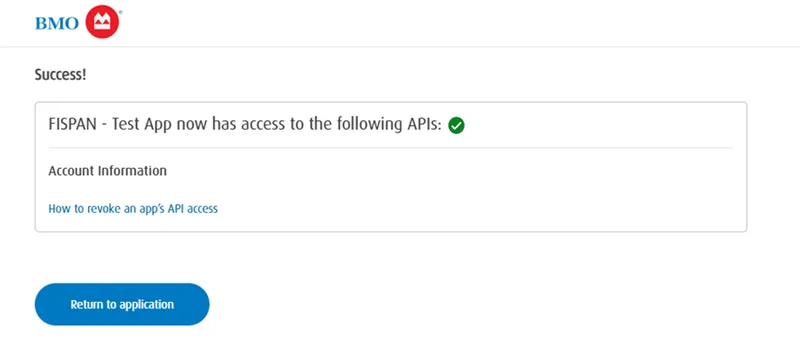
Click Return to application to be directed to the installation wizard.
Syncing Bank Feeds
Connect Account
On the installation wizard, you will be selecting the bank account you chose earlier in Sage 300.
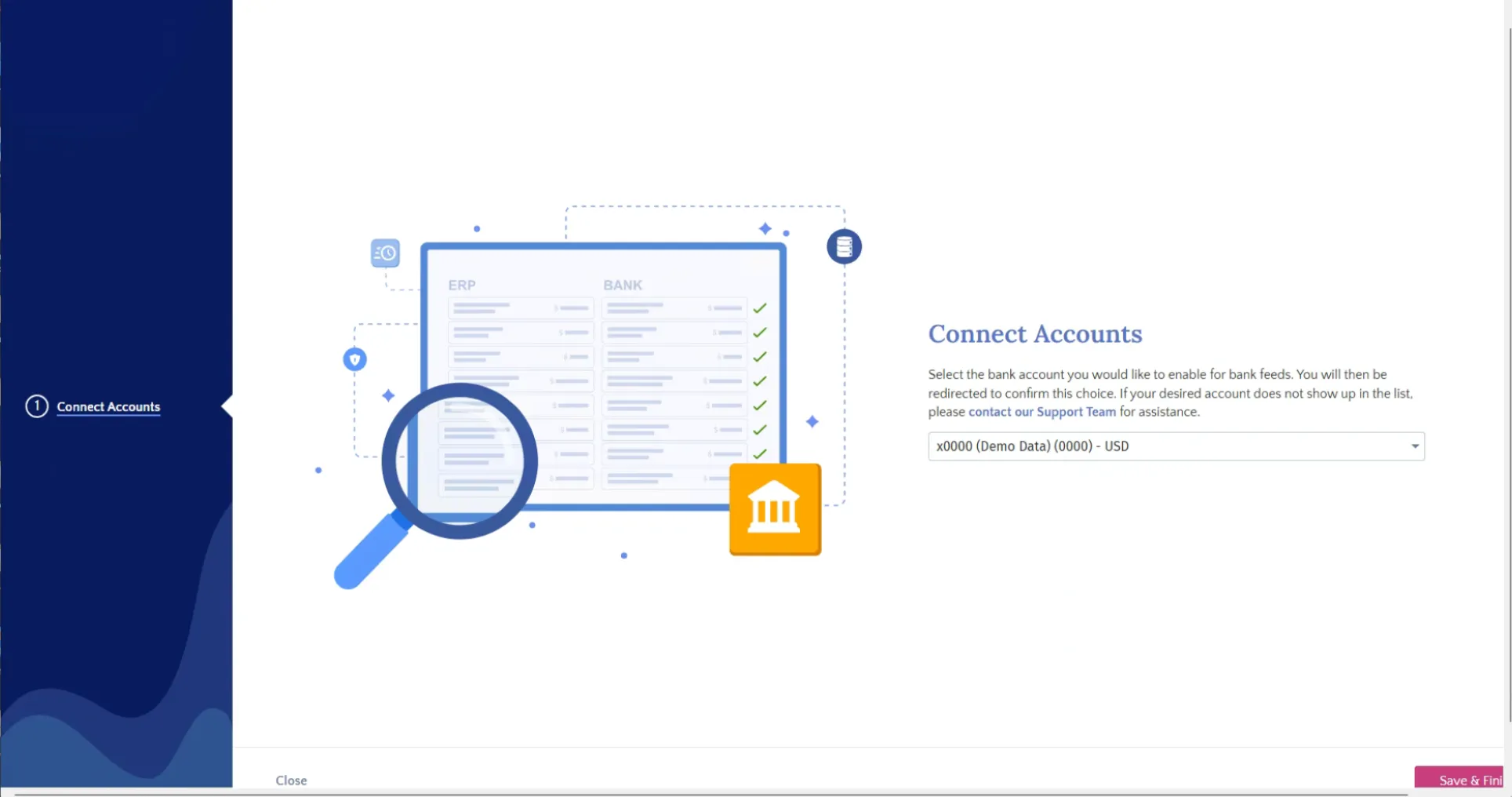
Select Save and Finish. You will automatically be redirected back to Sage.
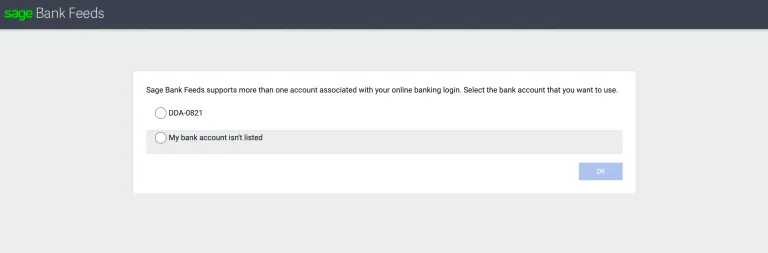
After being redirected back to Sage, select the same account again.
Select OK.
Select Import Start Date
You will be prompted to select a date to begin importing bank transactions from.
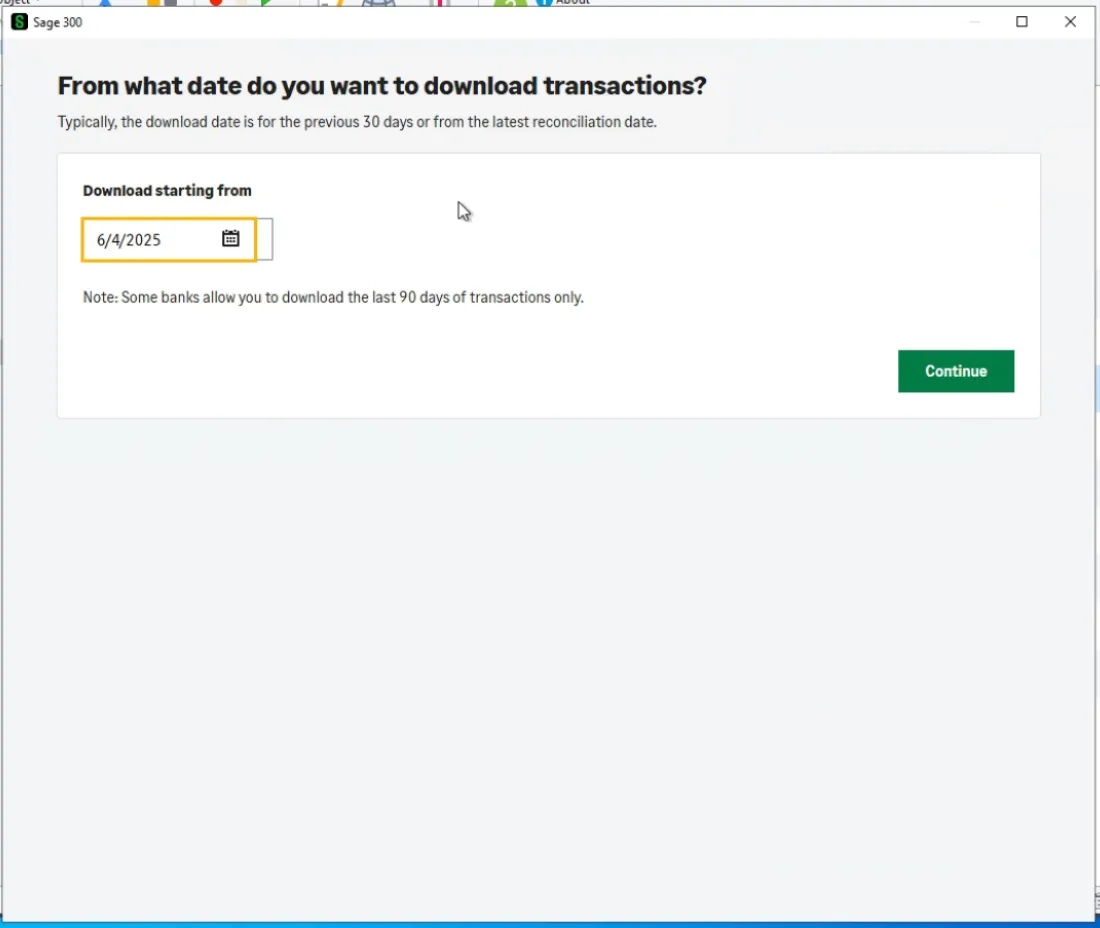
Once the date is selected, click Continue.
Complete the Setup
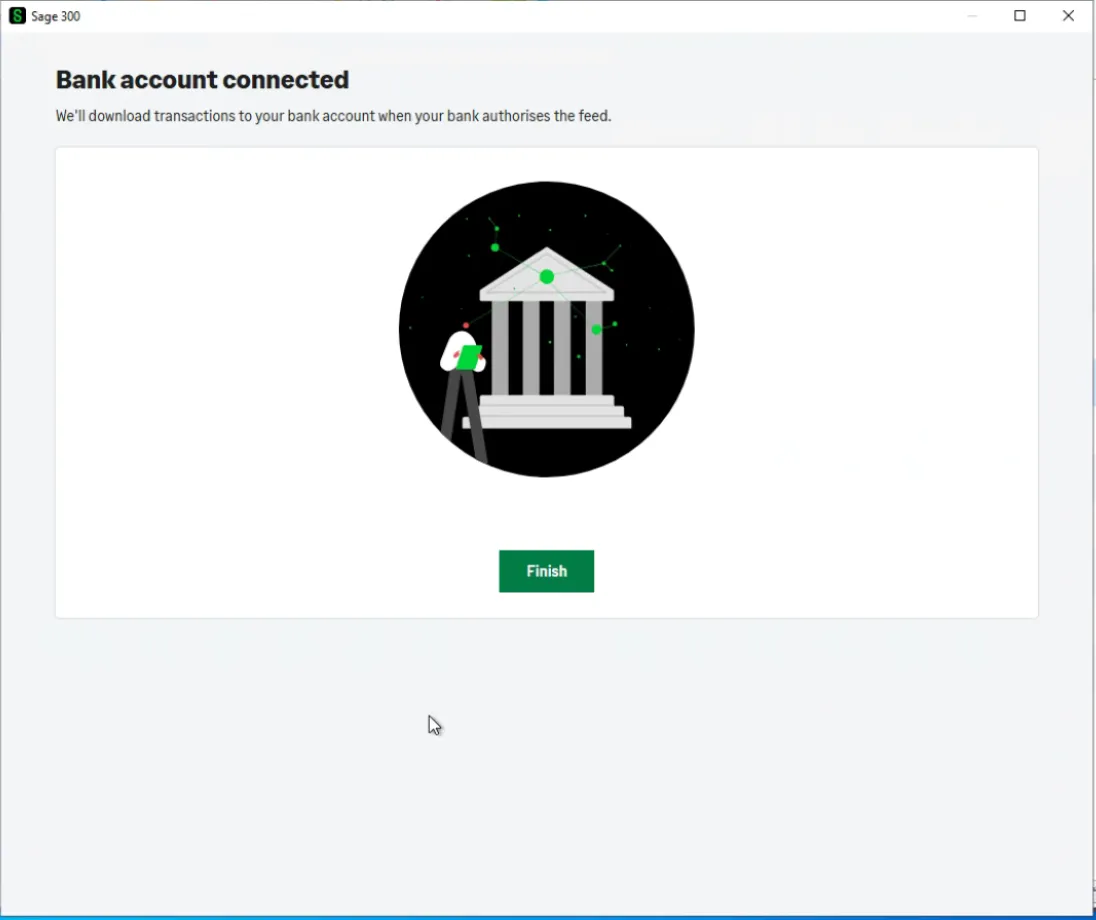
With the bank account now connected, click on Finish to close the pop-up window.
View Bank Feeds Data
To view data that has been pushed, click on Get Transactions button on the right side of the screen:

Retrieve Imported Bank Transactions
Settled bank transactions are pushed to the Bank Feeds feature once per day, typically in the morning (Eastern Standard Time/EST).
TIP: We recommend retrieving transactions once a day at most, as there won't be any new settled transactions pushed multiple times throughout the day.
Once your bank accounts are connected via Bank Feeds, your bank transactions will automatically feed into the Bank Reconciliation module in Sage 300.
To manually retrieve the latest daily transactions:
Go to Bank Reconciliation
Navigate to Common Services -> Bank Services -> Bank Transactions -> Reconcile E-Statements.
Get Bank Feed Transactions
On the Reconcile E-Statements page, enter the Bank Code you want to retrieve transactions.
Click on Get Transactions button on the right side of the screen

Save Transactions
Once the transactions have loaded, click Save.
The Comment 2 column contains additional payment information passed from your bank to the Memo field within FISPAN and is now displayed in the Comment 2 column.